Colorado
The Grand Traverse 40 miler
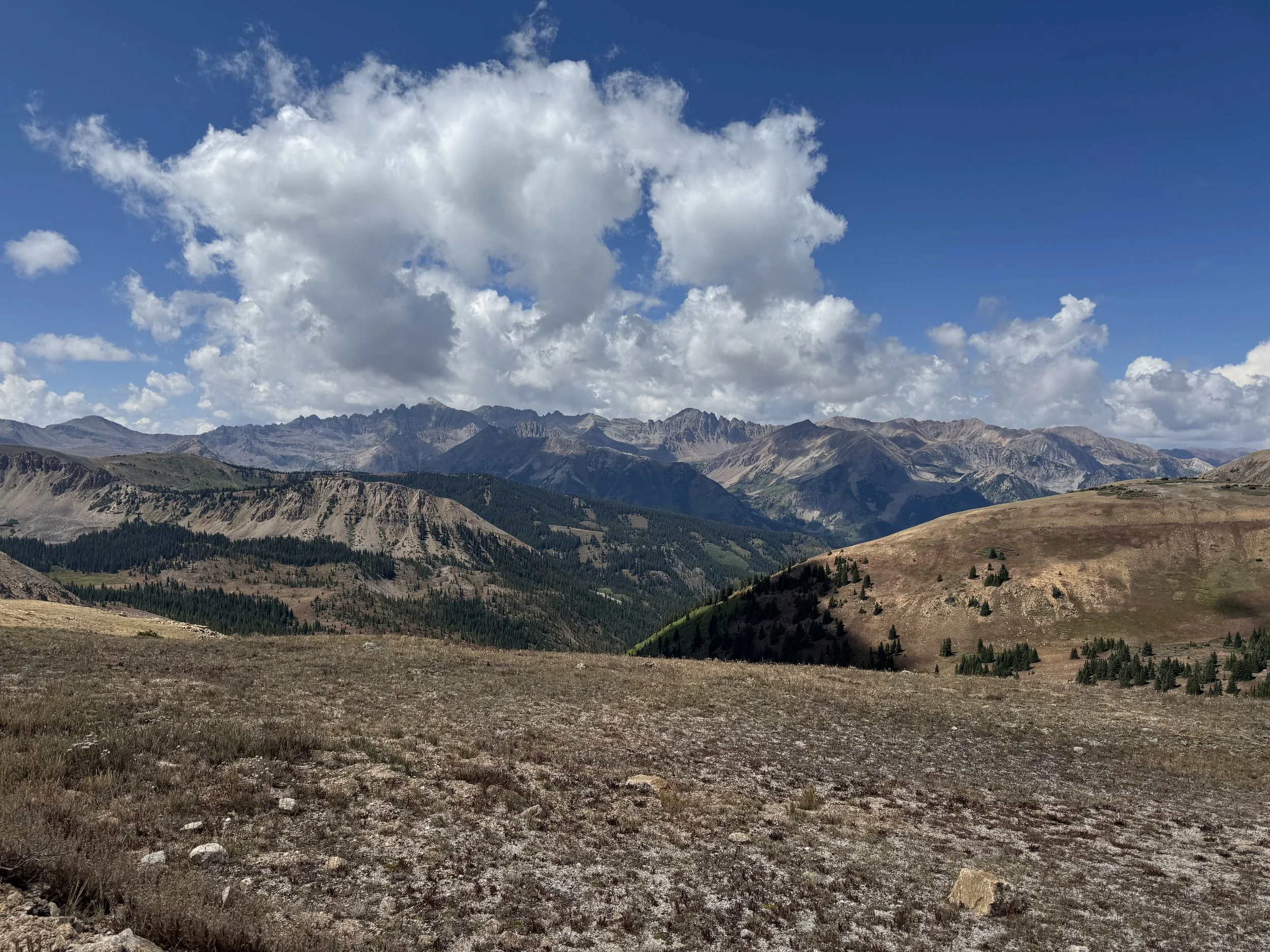
The Elk Mountains are some of the most beautiful in Colorado. Perhaps you’ve heard of The Maroon Bells? They, among other prominent peaks, are part of the Elk Mountains.
The Grand Traverse covers a historical route between the towns of Crested Butte and Aspen. As a crow flies, those towns are about 35-40 miles apart, which sets the perfect backdrop for a running race. The drive between the two towns on Kebler Pass is about 3.5 hours. Although it is a beautiful drive, the run piqued my interest because it contains some of the best elements in a traverse: Forest single track, above-tree-line views, backcountry technical trails in high elevation, potentially interesting mountain weather, and a desirable finish destination. Who wouldn’t be motivated to run to Aspen? When I stumbled upon the Grand Traverse, I knew I had to run it.
To prepare for the altitude, I flew from sea level to my cabin in the Sangre De Cristo mountains in Northern New Mexico, where I slept and hiked for four days. Even though this was minimal altitude preparation, it helped me adjust slightly, at least mentally, it reminded me how I would feel above 11,000 feet. Science advises runners should either arrive 7-10 days before a high-altitude event, OR, arrive the day before the race and run before the body figures out the air is thinner. I did neither, but it all worked. There is a reason why 90% of the runners in the Grand Traverse are Colorado residents! The altitude is serious. Half of the Grand Traverse takes place 20 miles above 11,000 feet.
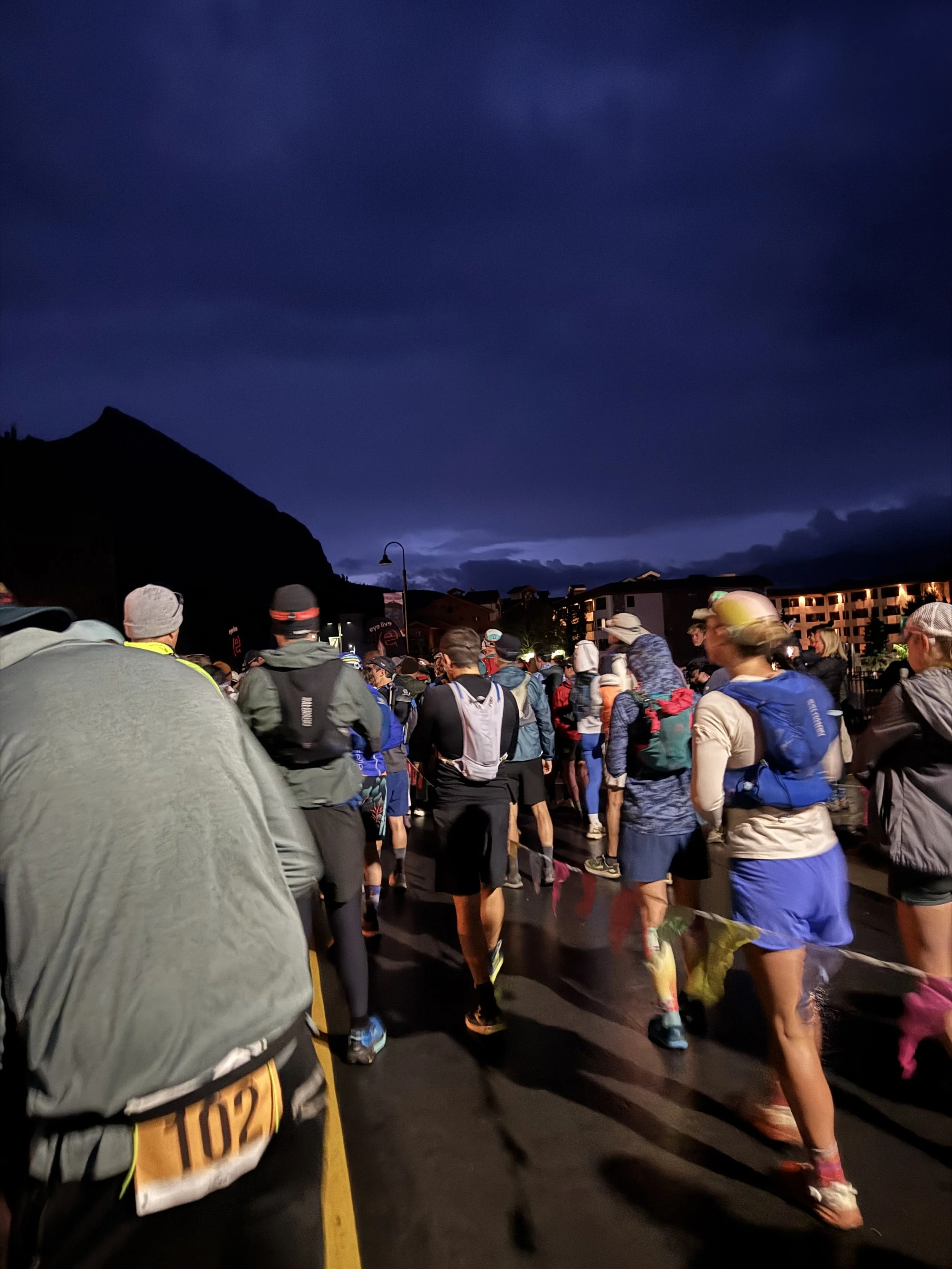
Race day brought 350 runners to the starting line to explore the historical route. The course covers terrain once travelled by the Ute tribe, then later by the silver and coal miners and it was once a postal route. Last year, out of 350 runners, the results show that 229 finished. Talk about intimidating! My goal for the race was to chase the cut-offs without going out too fast and dying. I wasn’t sure how the elevation would affect me, and this course was the longest I had run in a race.
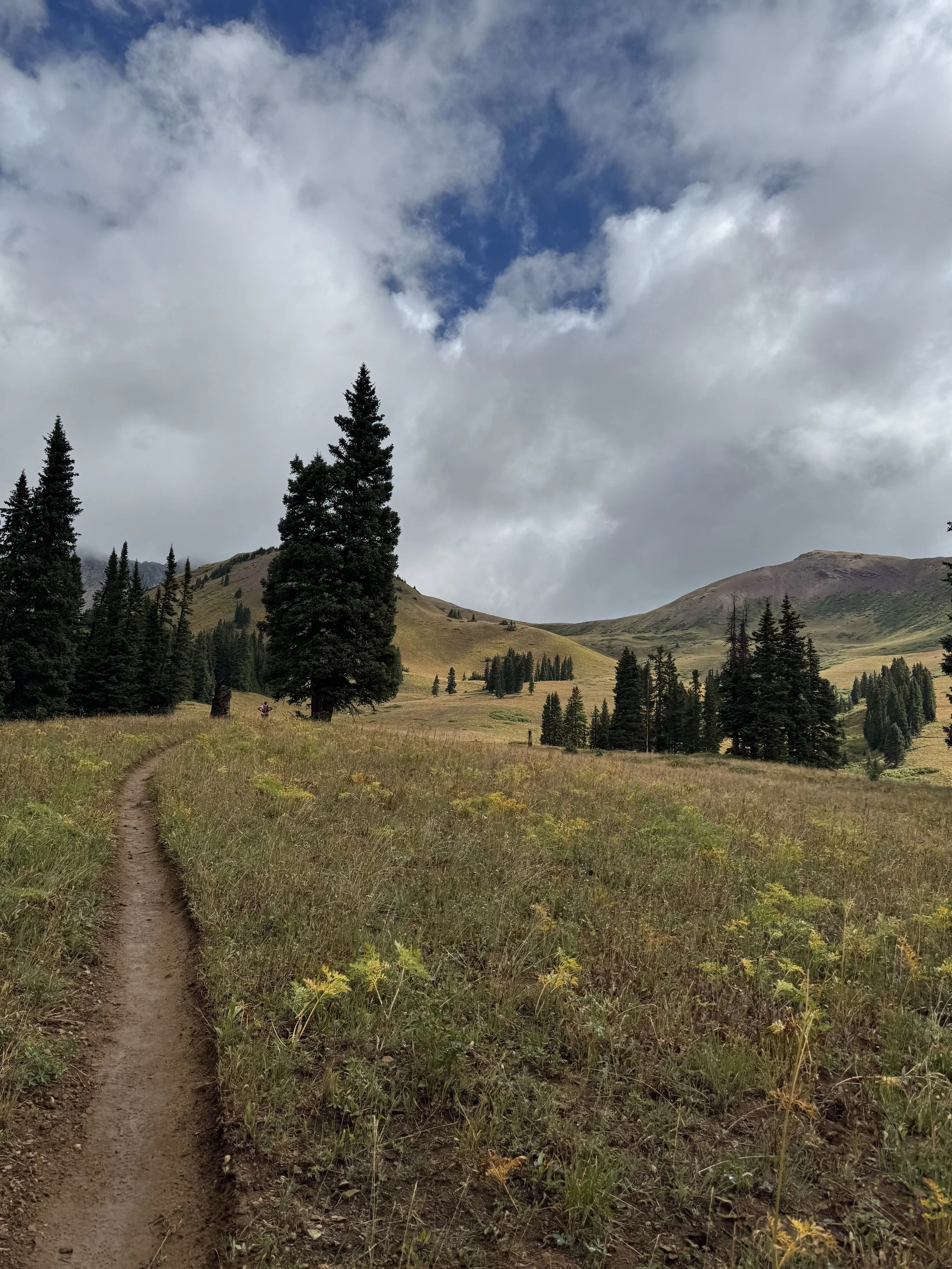
We woke up in Crested Butte to rain. Thankfully it stopped, but I knew the trails would be wet. I took advantage of the drop bag option, and I sent an extra pair of dry shoes to the halfway aid station just in case. The elevation at the start is around 9400 feet. Running the first 9 or so miles felt like a warm-up, with up and down single-track meandering through Aspen groves and occasional views of Crested Butte rising from the clouds. And a few cows. Avoiding cow poop was paramount. But this section was fun, although the single track dictated the running order and pace for several miles. It was here where I learned from another runner that her friends were cut off in a previous year with only 5 miles left to go in the race. YIKES. The cut-offs are serious. Eventually we took our shoes off, crossed a calf-high creek and ascended to the first aid station.
After the first aid station the climb intensified and we were treated to the first views of the day. A lot of people started to struggle at this point, but the views made it worth it! It was here where scenery opened up to valleys, peaks and sunshine!
Next, I was on to Taylor’s pass which is a little over the halfway point. Taylor’s pass was a full aid station, and I finally enjoyed some coca cola and snagged a few more gels. The views of Taylor Lake and the surrounding peaks are incredible, and I was so happy to be up there. Music was playing, people were grilling, and it was quite an upbeat scene. However, I wanted to stay well ahead of the cut-offs so I quickly refilled my flasks and off I went.
Along Richman Ridge I noticed a sign for the Collegiate Peaks Wilderness. This was significant because I had plans to hike the Collegiate Loop two weeks later. I was so excited to extend my views to the Collegiate peaks it kept me moving. Some of the climbing during this section was a bit brutal, but overall, I knew it would be mostly downhill soon.
Finally, at the second to last aid station, with 11ish miles to go, I met another runner who made the rest of the run pass by quickly. We chatted about various races we’d run and training goals and such. She was around my age and she was super strong. It was nice to have some camaraderie to pass the time until we finally came upon the last aid station with 5 miles left.
From there I looked to the right and saw a single-track trail. Finally A chute that would take me to the finish. I couldn’t wait to get going. I didn’t even stop at the last aid station; I just took off and down I went. I think I passed about 10 people on that descent into Aspen. It was a brutal, 3133 feet of elevation loss over 4.5 miles in a ski resort, but I could literally HEAR the finish line. I really wanted to get under 11 hours for this race and that motivated me to go as fast as I could, but unfortunately with my three bathroom stops during the race, I missed my goal by 5 minutes. That is the cost of staying hydrated. However, I was happy to finish in the middle of the pack and find my way through a new distance. At the finishing celebration I ate amazing food (pesto lasagna) and met lots of locals. I learned that Boulder has quite a running scene. Darn I wish I could afford Boulder.
If I could run a race annually, I think this race would be it. The towns of Crested Butte and Aspen are beautiful and worthy of several visits. The race is well organized. Even so a point-to-point race is a logistical challenge. The whole adventure, including “acclimating”, took me a week. The race provides a return shuttle to Crested Butte, but the last thing I wanted was to sit for 3.5 hours on a bus after running all day. I chose to stay the night in Aspen and return the following day via a rental car, which allowed me flexibility to wind my way back and enjoy the scenery. If you decide to run this race as a non-local, I recommend making it a vacation and staying awhile.